Creality's Warranty Loophole: How They Tried to Charge Us $30 for a Defective Sensor
Is a CR-Touch sensor a "consumable"? Creality thinks so. After our CR-10 SE failed, we spent 23 days fighting a warranty claim that should have taken minutes. Here’s the playbook they use to make you give up, and the exact steps we took to force them to pay.
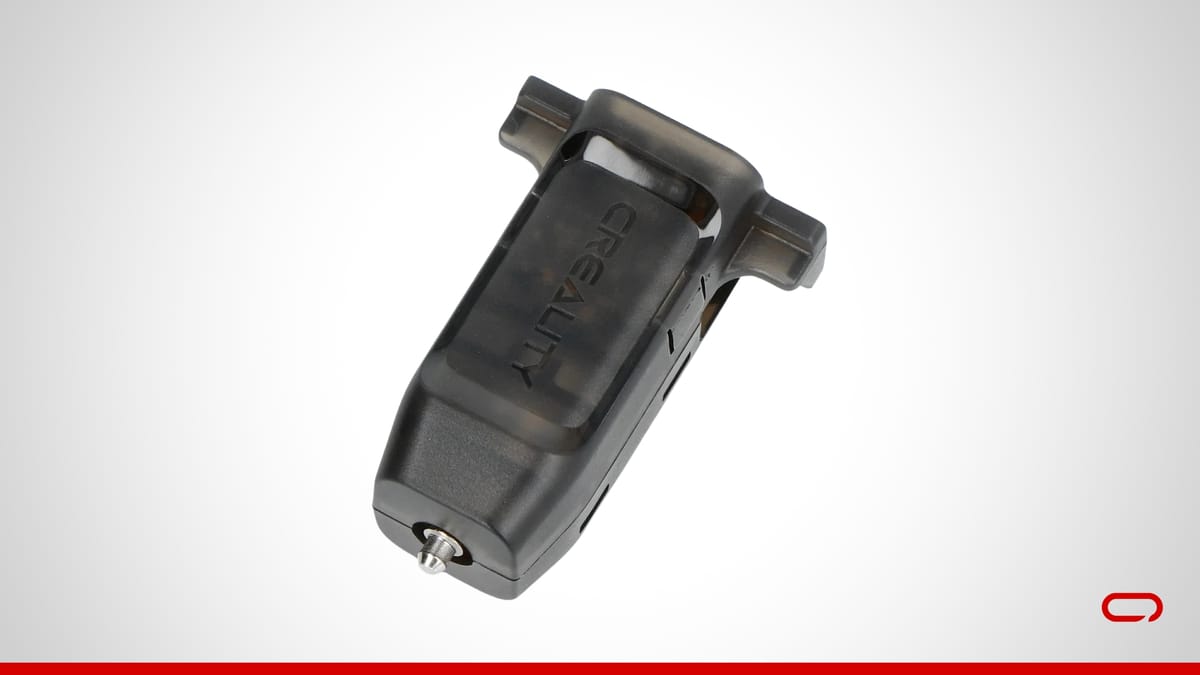
Our CR-10 SE's CR-Touch sensor failed in September 2025, still well within the 2-year warranty period. What followed was a 23-day battle where Creality's distributor tried every excuse in the book to avoid honoring a legal warranty claim. This isn't just our story, it's probably a pattern that affects Creality customers worldwide.
The Problem: A $10 Sensor That Shouldn't Have Failed
Let's start with what actually broke. The CR-Touch auto-leveling sensor on our Creality CR-10 SE stopped functioning properly in September 2025. Not a nozzle that wore out from hundreds of hours of printing. Not a belt that stretched. Not a fan bearing that gave up after thousands of hours. An electronic sensor with a probe mechanism.
For context, we've been running this printer regularly since purchasing it in March 2024, not abusively, not commercially, just standard maker use. Print a few parts, tweak some settings, maybe run an overnight print. The kind of use any hobbyist would expect from a $400 printer.
The CR-Touch works by using a small metal probe that extends and retracts to physically contact the build plate. The probe’s motion is controlled magnetically via an internal electromagnet, and contact is detected electronically by an internal sensor. The probe itself acts only as a mechanical trigger for the electronic detection system. When it failed, the printer could no longer probe the bed correctly, and therefore refusing to print.
In our case, the CR-Touch has repeatedly failed due to the probe sticking, most likely caused by humidity, an issue we have encountered before. We contacted support at the time and were informed that there was nothing they could do. Cleaning the probe temporarily restored normal operation, but the issue returned after a short period, eventually leading to complete failure.
While it might be possible to resolve this by disassembling the sensor, this is neither a documented procedure nor something users are expected, or advised, to do under warranty. At this point, we believe this reflects a quality and reliability issue rather than user error; it is unreasonable to expect someone who purchased a consumer 3D printer to disassemble a critical sensor just to keep it functioning.
We documented everything: photos of the sensor, screenshots of the error messages, videos of the failed leveling attempts. Built our case. Opened a support ticket on September 15, 2025, through the official distributor's support portal.
Day 1-8: The "$50 Solution"
Eight days later, we got our first response. Not an apology. Not "let's troubleshoot this." Not even "we'll check if it's covered under warranty."
The message was straightforward:
"The distributor company stated that they can assist for a fee. The cost of the CR-Touch sensor 1200 TL (approximately $30 USD at the time). If you wish, we can arrange the shipment."
Let's pause here. We're still within the 2-year warranty period of a printer that cost around $400. A critical sensor, one that's marketed as a key feature of this printer, has failed through no fault of our own. And the first response is a sales pitch to buy a replacement.
No investigation into whether it's a known issue. No checking the warranty status. Just... "pay us $30 and we'll send you the part."
Here's what made this particularly frustrating: if we wanted to just buy a replacement CR-Touch, we could have ordered one from AliExpress for $15-20 with free shipping. Why would we pay the distributor's markup when they weren't even offering warranty support?
Our response was simple: this is clearly a manufacturer defect, not user damage. The printer is still under the legally mandated 2-year warranty period. We didn't break this; it failed on its own. We're not paying for a replacement.
Global Policy vs Local Law
This is where things got interesting, and where Creality's playbook started to reveal itself.
The distributor's position shifted to a more "official" stance. They weren't refusing warranty coverage, they were explaining that warranty coverage requires "manufacturer approval" and is subject to Creality's official warranty policy. They sent us a link to Creality's global warranty documentation.
According to Creality's warranty terms, certain components are classified as "consumable parts" or "wear items" with limited lifespans. These parts are explicitly excluded from standard warranty coverage because they're expected to wear out through normal use. Think printer nozzles, build surface sheets, belts, things that physically degrade with use.
The distributor's argument: the CR-Touch leveling probe is a consumable component due to the mechanical nature of its spring-loaded probe mechanism. Because the probe physically contacts the bed repeatedly, it experiences mechanical wear, and therefore it's not covered under the standard warranty.
On the surface, this sounds reasonable. Except it's not.
Why This Argument Is Nonsense
Let's break down what the CR-Touch actually is:
- It's an electronic sensor. The core functionality is electronic detection, not mechanical wear. The probe is just the trigger mechanism.
- The probe doesn't wear out from contact. Its motion is controlled magnetically via an internal electromagnet metal pin that taps a metal or glass surface. Unless you're running commercial print farms 24/7, that probe will outlast the printer itself. We're talking about a piece of hardened steel tapping a smooth surface a few dozen times per print session.
- If it failed during normal use within warranty, that's a defect, not wear. Consumable parts wear gradually and predictably. A nozzle clogs over time. A belt stretches after hundreds of print hours. A fan bearing gets noisy before it fails. Electronic sensors don't gradually "wear out", they either work or they don't. When one fails during the warranty period from normal hobby use, that's a manufacturing defect.
- Creality markets the CR-Touch as a premium feature. The entire selling point of the CR-10 SE is the auto-leveling capability. If this sensor is expected to fail regularly, that's a design flaw, not normal wear and tear.
Here's the kicker: we're not in some legal gray area here. We purchased this printer on March 11, 2024, with a proper invoice through an authorized distributor. In our market (Turkey), consumer protection law mandates a minimum 2-year warranty on all electronic products. Turkish Consumer Protection Law No. 6502, Article 6, Paragraph 1 is very clear about this.
But this isn't just a Turkish law issue. This is about a global company trying to redefine electronic components as "consumables" to avoid warranty obligations. Whether you're in Turkey, the EU with its 2-year minimum warranty, the US with implied warranty of merchantability, or anywhere else, when an electronic sensor fails during the warranty period, that's a defect.
Days 9-18: The Documentation Battle
After our initial pushback, the responses got more detailed. The distributor clearly escalated to whoever handles "difficult" warranty claims.
On September 24, they sent a longer message explaining their position. They acknowledged our concerns but maintained that replacement parts and warranty coverage require manufacturer approval, and that Creality's warranty policy determines what's covered, not local law interpretations.
They included this line, which really captures the corporate doublespeak:
"While Turkish Consumer Protection Law No. 6502 sets general warranty obligations, please note that the binding warranty terms for the CR-10 SE are those defined by the manufacturer. Therefore, the warranty period and coverage are determined by Creality's own policy, not by local adaptation."
Let's translate this: "We know what the law says, but we're going to follow Creality's policy instead and hope you don't push back hard enough."
Our Response: Calling Out the Loophole
We sent back a detailed message making several key points:
Point 1: The Law Isn't a Suggestion
Consumer protection laws aren't "general obligations" that manufacturers can choose to ignore. They're legally binding requirements. When you sell a product in a market, you operate under that market's consumer protection framework. Creality doesn't get to write their own rules.
Point 2: The CR-Touch Isn't a Consumable
We have a working printer. We're replacing nozzles when they clog. We're adjusting belts when they loosen. We're cleaning the build plate. These are consumables, we understand that. But an electronic sensor that stops functioning isn't wear and tear, it's a failure.
Point 3: The Invoice Matters
We have an official invoice registered in the e-Arşiv system (Turkey's official electronic invoice system), dated March 11, 2024. This isn't a grey market import or a Kickstarter backing where warranty terms are unclear. This is a proper commercial transaction with full consumer protection rights.
Point 4: This Is the Reasonable Request
We're not asking for a free upgrade. We're not claiming damage we caused. We're not trying to get parts for free builds. We have a failed component on a printer that's still under warranty, and we want it replaced. This is exactly what warranties are for.
We kept our tone professional but firm. No threats, no anger, just clear statements of fact and law.
Making You Give Up
Here's what became clear throughout this process: the goal isn't to defend Creality's warranty policy on merit. The goal is to make the process exhausting enough that most customers just pay.
Think about the friction they introduced:
- 8-day initial response time for a simple sensor failure
- "We need manufacturer approval" for a clear warranty case
- "Consumable part" classification for an electronic sensor
- "Global policy supersedes local law" argument that's legally dubious at best
- Multiple back-and-forth exchanges requiring the customer to cite specific laws
Each of these is a hurdle. Each one makes it harder to get warranty service. Each one increases the chance that the customer says "screw it, I'll just buy the part."
And for a $30 part? Most people would absolutely do that. They'd grumble, maybe leave a bad review, but they'd pay and move on. The calculation is simple: $30 and two days, or potentially weeks of fighting with support?
This is the business model. Make legitimate warranty claims just difficult enough that most customers don't follow through. The few who do push back eventually get their parts, but the majority pay. It's a hidden revenue stream built on warranty denial.
On September 29, they sent another message with a screenshot from the distributor (in Turkish) explaining their position on consumable parts and warranty exclusions. The document looked official, referenced the correct laws, and was clearly designed to make customers think "well, I guess they're right."
We responded on September 29 with probably our least diplomatic message:
"Come on, let's not be ridiculous here. I am trying to reach a middle ground rather than opening a case in court. This clearly not wear and tear. This is not a belt or fan. This is an electronic component that failed. This just screams crap quality if a sensor fail before I wear out a single belt on the printer. Make this right to avoid legal consequences."
Looking back, mentioning legal consequences probably wasn't our best move. It put the support rep on the defensive. But we were frustrated, 23 days into what should have been a simple warranty replacement.
When Support Becomes Adversarial
The response to our "make this right" message was... interesting.
On September 30, the support rep (who had been professional throughout, to her credit) sent this:
"Dear Saleh, There is no need to threaten us constantly with legal action because your legal rights are always protected and you are, of course, free to exercise them as you see fit. Whether or not we provide this part, your rights remain unchanged. 😊 Please understand that this is not the first time we have sold or serviced this device and the CR-Touch probe does have a limited service life as the device manufacturer also declares like that."
Let's break this down:
"There is no need to threaten us constantly" - We'd mentioned legal action once. Once isn't "constantly."
"Your legal rights are always protected" - Sure, but we're trying to avoid spending six months in consumer arbitration over a $10 wholesale part.
"Whether or not we provide this part, your rights remain unchanged" - True but irrelevant. The question isn't whether we have rights; it's whether they're honoring them.
The 😊 emoji - This is the customer service equivalent of "per my last email." It's the polite passive-aggressive indicator that they're done with the conversation but maintaining professional courtesy.
"The CR-Touch probe does have a limited service life" - Still doesn't make it a consumable. Limited service life means years, not months.
The message continued:
"However, we do understand your frustration and we want to emphasize once again that our only goal is to support our customers user experience. We will raise this issue with the distributor and request the part on your behalf again, our sole intention is to convince them for your benefit."
Translation: "We're escalating this internally because you're not going away, but we're framing it as us doing you a favor, not us correcting a warranty denial."
Our Response: Clarifying Intent
We sent a measured response on September 30:
"Thank you for your response. I would like to clarify that I am not threatening your company; I am simply exercising and insisting on my legal rights as a consumer. There is a clear difference between threatening and firmly requesting what the law already guarantees me.
The CR-Touch is not a consumable part like a nozzle, belt, or fan. It is an electronic sensor, and its premature failure cannot reasonably be classified as normal wear and tear. Failing this early in the device's life indicates a defect and therefore should fall under warranty protection.
I appreciate that you are escalating this matter to the distributor again, and I kindly request that you emphasize these points in your communication with them. My only goal is a fair and lawful resolution without needing to pursue further formal steps."
Firm but polite. Clear distinction between asserting rights and making threats. Specific technical points about why the CR-Touch isn't a consumable.
Days 19-23: The Sudden Resolution
On October 4, something shifted. We got a message from the support rep:
"Thank you for your message. The distributor is quite firm about the CR-Touch being a consumable component due to the nature of its probe mechanism and their warranty process operates accordingly. However, I'm currently trying to convince them to make an exception for the sake of customer satisfaction. It's very likely that I'll be able to get a replacement sent out. I'll update you as soon as possible."
Notice the language change: "make an exception for the sake of customer satisfaction."
Not "honor the warranty claim." Not "correct our initial assessment." Not "recognize this as a defect." An exception.
This framing is crucial because it maintains the fiction that they were right all along and are now being generous. It avoids setting a precedent or admitting that their "consumable parts" classification was wrong.
Three days later, on October 7:
"I'm writing to provide a status update, the part was shipped to you yesterday."
23 days. Six support exchanges. Multiple legal citations. And finally, a replacement part.
The ticket was marked as "Resolved - Part Shipped - Customer Installed" and closed.
What Actually Happened: The Real Calculation
Let's be honest about what changed. It wasn't a sudden realization that we were legally right. It wasn't a moral awakening about consumer protection. It was a cost-benefit analysis.
The distributor calculated:
Option A: Continue Fighting
- Potential legal case (expensive even if they win)
- Time spent by support staff (already 23 days in)
- Negative publicity if this goes public
- Risk of regulatory scrutiny if customer files complaint with consumer protection agency
- All this over a part that costs them maybe $10-15 wholesale
Option B: Send the Part
- $10-15 in parts cost
- Maintain plausible deniability by framing it as an "exception"
- Close the ticket and move on
- Customer goes away happy (probably)
Option B was obviously cheaper.
But here's the thing: this calculation only happens if you push back. If we'd paid the $30 on day 8, that's pure profit for them. If we'd given up after the first "consumable part" explanation, they save the part cost. The system only "works" for the customer if you're willing to be the squeaky wheel.
The Bigger Problem: How Many People Just Paid?
This is what bothers us most about this experience. We have the knowledge, time, and stubbornness to fight a 23-day warranty battle over a $30 part. Most people don't.
Think about the average Creality customer:
- First-time 3D printer buyer who doesn't know what's normal wear vs. defect
- Hobbyist who wants to print things, not study consumer protection law
- Someone who values their time and would rather pay $30 than spend three weeks fighting
- User in a market without strong consumer protection laws
- Customer who trusts that official-looking warranty documents are legally correct
How many of those people just paid the $30?
We'd guess most of them. Maybe 80-90%. And that's the business model.
Creality (or their distributors) aren't stupid. They know that:
- Electronic sensors failing is a defect, not normal wear
- Classifying electronic components as "consumables" is legally questionable in most markets
- Claiming manufacturer policy supersedes local law won't hold up in court
- Most warranty fights cost more to fight than the parts are worth
But they also know that most customers won't fight. They'll see "manufacturer policy," "consumable parts," "global warranty terms," and assume the company knows better. They'll pay the $30 and move on. This is a tax on customer ignorance and exhaustion.
The Pattern: It's Not Just Us
After this experience, we started looking at Creality warranty claims more broadly. Turns out, we're not alone.
Search "Creality warranty claim denied" or "Creality consumable parts" and you'll find dozens of similar stories:
- Hotend thermistor failures within warranty classified as "consumable wear"
- Mainboard failures blamed on "power supply issues" (customer's fault)
- Screen failures during warranty period called "normal component lifespan"
- Extruder motor failures marked as "maintenance items"
The pattern is consistent:
- Component fails early in ownership
- Customer opens warranty claim
- Distributor/support says it's not covered (consumable, user error, etc.)
- Customer either pays or fights
- If customer fights long enough with legal knowledge, they sometimes get the part
It's not a bug in their warranty process. It's the warranty process.
Why This Works (For Them)
From Creality's perspective, this makes perfect business sense:
Lower Warranty Costs: If 80% of customers pay for parts that should be covered, that's an 80% reduction in warranty expenses. On a company selling hundreds of thousands of printers annually, that's millions in saved costs.
Distributed Liability: Distributors handle support and absorb customer anger. Creality maintains plausible deniability. "Talk to your local distributor" becomes the shield against criticism.
Difficult to Prove Pattern: Each case looks individual. This customer got their part. That customer paid for theirs. There's no smoking gun email saying "deny warranty claims by default." It's just consistent application of "policy."
Low Risk of Organized Action: 3D printer enthusiasts aren't organizing class action lawsuits over $30 parts. The cost-benefit doesn't work for lawyers, and the amounts are too small for regulatory agencies to care.
Market Fragmentation: Different countries, different distributors, different support portals. Hard to track the global pattern when every customer's experience is slightly different.
From a pure profit maximization standpoint, it's brilliant. From a consumer protection standpoint, it's exploitative.
What This Means for Creality Customers
If you own a Creality printer, here's what you should know:
1. Document Everything From Day One
Keep your invoice, especially if it's an official electronic invoice. Take photos of your printer on arrival. Save all communication with support. If something fails, you need proof of purchase date and evidence of the failure.
2. Know Your Local Consumer Protection Laws
In the EU, you have a 2-year minimum warranty on consumer goods. In the US, implied warranty of merchantability covers defects for a "reasonable time." In Turkey, it's explicitly 2 years for electronics. Whatever your market, learn the basics.
3. Don't Accept "Consumable Parts" Classification Without Pushback
If an electronic component fails early, that's a defect. Nozzles are consumables. Belts are consumables. Build surfaces are consumables. Sensors, motors, mainboards, and screens are not.
4. Be Prepared for a Long Process
23 days is actually pretty fast for warranty disputes. Some people report 30-60 days. Budget your time and patience accordingly. This isn't a "send in your printer for a week" kind of warranty, it's a "fight for weeks via email" situation.
5. Use Specific Legal Citations
Vague "this should be covered" arguments won't work. You need to cite specific laws, explain why the failure is a defect, and document your normal use. The more specific you are, the harder it is for them to dismiss you.
6. Recognize When You're Being Run Around
If you're on your fifth email exchange and they're still saying "we need manufacturer approval," you're being run around. Escalate differently, social media, consumer protection agencies, public reviews. Change the cost-benefit calculation.
7. Consider the True Cost of "Budget" Printers
A $400 printer that requires $30 parts purchases every 18 months isn't really a $400 printer. It's a $500-600 printer with hidden costs over its usable lifetime. Factor in potential warranty fight time as well.
Would We Buy Creality Again?
This is the question everyone asks. After 23 days of fighting for a $30 part we were legally entitled to, would we buy another Creality printer?
The honest answer: probably not for critical applications.
Here's our reasoning:
The Hardware Is Actually Good: The CR-10 SE prints well. The build quality is solid. The features work as advertised (when they work). We're not mad at the printer itself.
The Company's Warranty Philosophy Is the Problem: It's not that parts fail, that happens with any manufacturer. It's that when parts fail, getting warranty service feels like an adversarial legal battle instead of customer support.
There Are Alternatives Now: Bambu Lab, Prusa, even upgraded Ender series printers with better support. The market has more options than when we bought the CR-10 SE.
Time Is Worth Something: 23 days of our time fighting for a warranty claim has value. If we'd just bought the part, we'd have been printing again in three days. Was the principle worth 20 days of downtime? Maybe. But it's a consideration.
For hobby use, occasional prints, learning 3D printing? Sure, Creality is fine. You're probably not pushing the machine hard enough to hit early failures, and if something breaks, you've got time to fight for warranty service or just buy the part.
For production work, business use, or anything where downtime matters? We'd spend more on a printer with better support. The TCO (total cost of ownership) includes warranty hassle time, not just purchase price.
The Fix: What Creality Should Do (But Won't)
If Creality actually cared about fixing this, here's what they'd change:
1. Clear Warranty Terms: Publish an actual list of what's covered and what's not. "Electronic components are covered for 24 months except consumables like nozzles and build surfaces" would be honest and fair.
2. Empower Distributors: Let authorized distributors handle obvious warranty claims without "manufacturer approval." A sensor failing at 18 months shouldn't require corporate escalation.
3. Faster Response Times: 8 days for an initial response is ridiculous in 2025. Same-day or next-day responses should be standard.
4. Admit When You're Wrong: When a customer clearly has a valid warranty claim and you deny it, just admit the mistake and send the part. "Making an exception" maintains the fiction that you were right.
5. Stop the "Consumable Parts" Gaslighting: An electronic sensor isn't a consumable. A motor isn't a consumable. Call them what they are: components with expected lifespans measured in years, not months.
Will they do any of this? Probably not. The current system is more profitable.
Our Advice: Document, Persist, and Know Your Rights
If you're facing a similar warranty issue with Creality or any other manufacturer, here's our practical advice:
Before You Contact Support:
- Gather your invoice, order confirmation, and any registration documents
- Take clear photos or videos of the issue
- Note the date of purchase and failure
- Research your local consumer protection laws
- Check if your payment method offers purchase protection
When You Open a Ticket:
- Be specific about the problem (not "it's broken" but "the CR-Touch sensor fails to deploy/retract properly")
- Include evidence (photos, videos, error logs)
- State your purchase date and invoice number
- Be polite but firm
If They Push Back:
- Don't accept "consumable parts" classification for electronic components
- Cite specific laws (consumer protection statutes in your jurisdiction)
- Distinguish between wear (gradual degradation) and failure (sudden defect)
- Ask for specific documentation of the part's "consumable" classification
- Request escalation to a manager or warranty specialist
If It Drags On:
- Keep all correspondence in one email thread for documentation
- Note response times and delays
- Set firm deadlines ("I need a response within 48 hours")
- Mention regulatory agencies if appropriate ("I'm considering filing with [consumer protection agency]")
- Be prepared to go public (reviews, social media, forums)
Know When to Escalate:
- If you've exchanged 5+ messages with no resolution
- If they're contradicting themselves
- If they're ignoring specific legal citations
- If delays are clearly intentional
The Resolution: Part Received, Printer Working
The replacement CR-Touch arrived on October 10, three days after shipping. Installation took about 15 minutes, disconnect the old sensor, plug in the new one, run bed leveling calibration.
It worked perfectly. The printer's been running flawlessly since then. First layers are consistent. Bed adhesion is solid. The auto-leveling does exactly what it should.
Which, honestly, just proves the point: the original sensor was defective. If the CR-Touch were truly a "consumable" that wears out quickly, we'd expect the replacement to show signs of degradation by now. But it doesn't. It works like new because it is new, and the old one failed due to a manufacturing defect, not wear.
The entire 23-day battle was over a legitimate warranty claim that should have been approved in 24 hours.
Final Thoughts: The Hidden Cost of "Budget" 3D Printing
Creality has built their brand on affordable, feature-rich printers. The CR-10 SE offers auto-leveling, a large build volume, and decent print quality for around $400. On paper, it's a great value.
But there's a hidden cost that doesn't show up in the spec sheet: the warranty support experience.
When you buy a Prusa, you're paying $800-1000, but you're also paying for legendary customer support. When something breaks, they overnight you parts. No questions, no legal battles, just "here's your replacement, let us know if you need help installing it."
When you buy a Creality, you're paying $400, but you're also signing up for potential warranty fights. When something breaks, you might spend weeks proving it's a defect, citing consumer protection laws, and escalating through multiple support tiers.
For some people, that trade-off makes sense. Save $600 upfront, deal with occasional support headaches. For others, the premium support is worth the extra money.
We're not saying don't buy Creality. We're saying know what you're buying. You're getting good hardware at a good price, but you're also getting budget-tier support. Plan accordingly.
And if you do end up in a warranty dispute: don't give up. They're counting on you to pay rather than fight. Prove them wrong.
Have you dealt with Creality warranty claims? We'd love to hear your experience in the comments. And if you're currently fighting a warranty denial, feel free to reference this article in your correspondence. Sometimes companies need to see that customers are comparing notes.