The $20 Radio That's Building an Internet Nobody Can Switch Off
A global movement of hikers, rescue workers, and everyday people is quietly stitching together a backup communication network using cheap radio chips. It works in the middle of nowhere, costs less than a round of drinks, and nobody owns it.
Picture the scene. You're three miles into a trail. The group split an hour ago to take different routes. Your phone says No Service. You need to know if the other half made it to the ridge. You open every app you have Google Maps, WhatsApp, Find My and they all stare back at you with the same grey silence.
Or maybe it's not a trail. Maybe it's a wildfire and the cell towers are down. Maybe it's a music festival and 50,000 people on Instagram at the same moment. Maybe it's a hurricane and you genuinely don't know if your neighbourhood has a way to communicate when the grid goes dark.
The thing is, in all of those situations, your phone still works. It's the network you're depending on that doesn't. The device in your pocket is perfectly functional. It just has nowhere to connect.
That gap between a working phone and a working connection is exactly what a technology called LoRa was built for. And after years of living almost entirely in the world of radio hobbyists and IoT, it's quietly becoming something much bigger.
 Flaresat Team
The Magic Radio
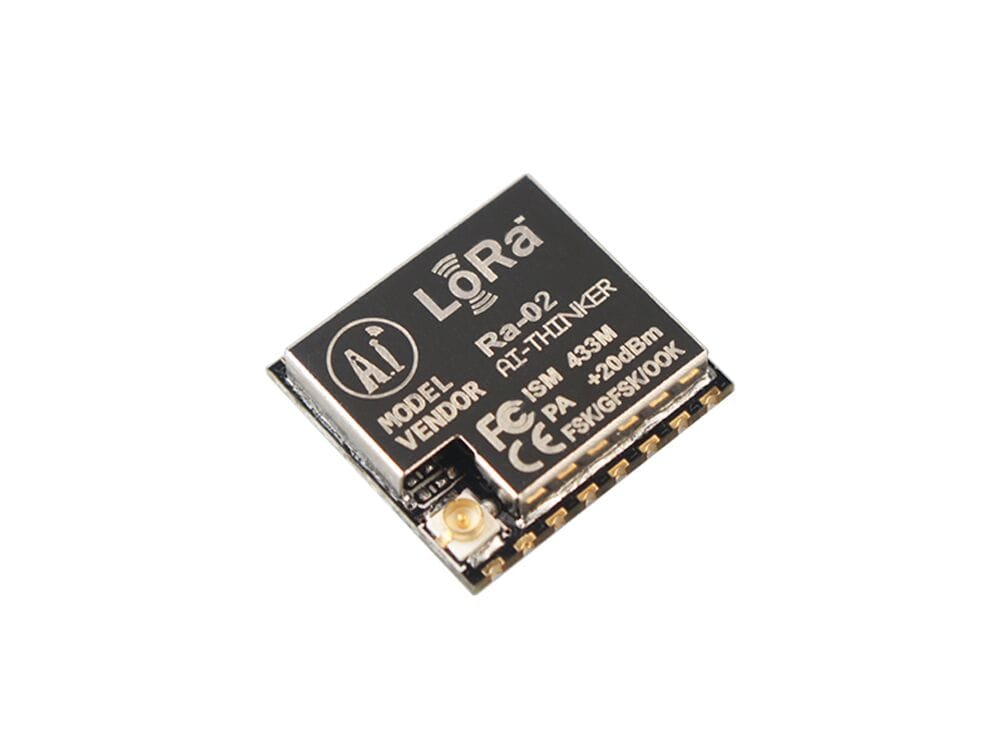
LoRa stands for Long Range. It's a radio technology originally developed in France in the early 2010s to let tiny sensors send small amounts of data over long distances without needing a cell tower anywhere nearby the kind of thing that lets a water meter or a parking sensor report its status from a remote location for years on a single battery.
For its first decade, that's mostly what it did. Smart city plumbing. Agricultural sensors. Utility monitoring. Useful, invisible, very unsexy.
Then something changed. Small circuit boards built around LoRa chips started appearing on sites like AliExpress for around $20. Open-source communities started writing firmware that could run on them. And people who liked building things started realising that if you networked those boards together, if you made each one automatically relay signals from every other one in range, you got something that had never really existed in this form before.
A network with no company behind it. No tower. No monthly bill. No single point of failure. No government that can flip a switch and shut it down. A communications grid that gets stronger every time someone adds a node, and belongs to everyone and no one simultaneously.
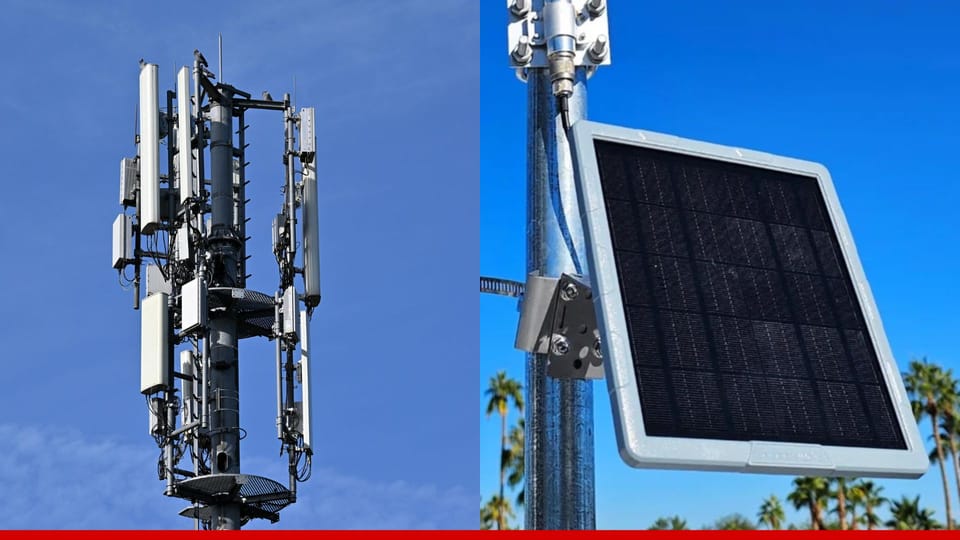
In open terrain, a single LoRa device reaches 10 to 15 kilometres. In a dense city, 1 to 2 kilometres between buildings. But in a mesh where each device automatically passes signals from any other device in range, range stops being about one link and starts being about the whole chain. A network of a dozen people spread across a mountain range can relay a message from one end to the other in seconds. Put a solar-powered relay node on a rooftop and you've extended the coverage by kilometres more, permanently, for free.
And that's exactly what communities are doing. Across cities in the US, Europe, and Australia, volunteer networks of relay nodes already exist, mounted on rooftops, attached to windows, bolted to radio poles, providing continuous mesh coverage over entire metropolitan areas. These aren't maintained by any company. They're maintained by the same kind of people who used to build amateur radio repeaters, except this time the network is usable by anyone with a $20 device and a smartphone.
Unlike virtually every other long-range radio technology, APRS, ham radio, GMRS, LoRa mesh operates in the unlicensed ISM band. No exam. No licence. No call sign registration. No permission from anyone. You buy the device and you're legally on the air in most countries worldwide, the same way you're legally allowed to use Wi-Fi or Bluetooth
The Two Internets Running Under Your Feet
The software powering this hardware has split into two major camps, and the split tells you something interesting about where the technology is headed.
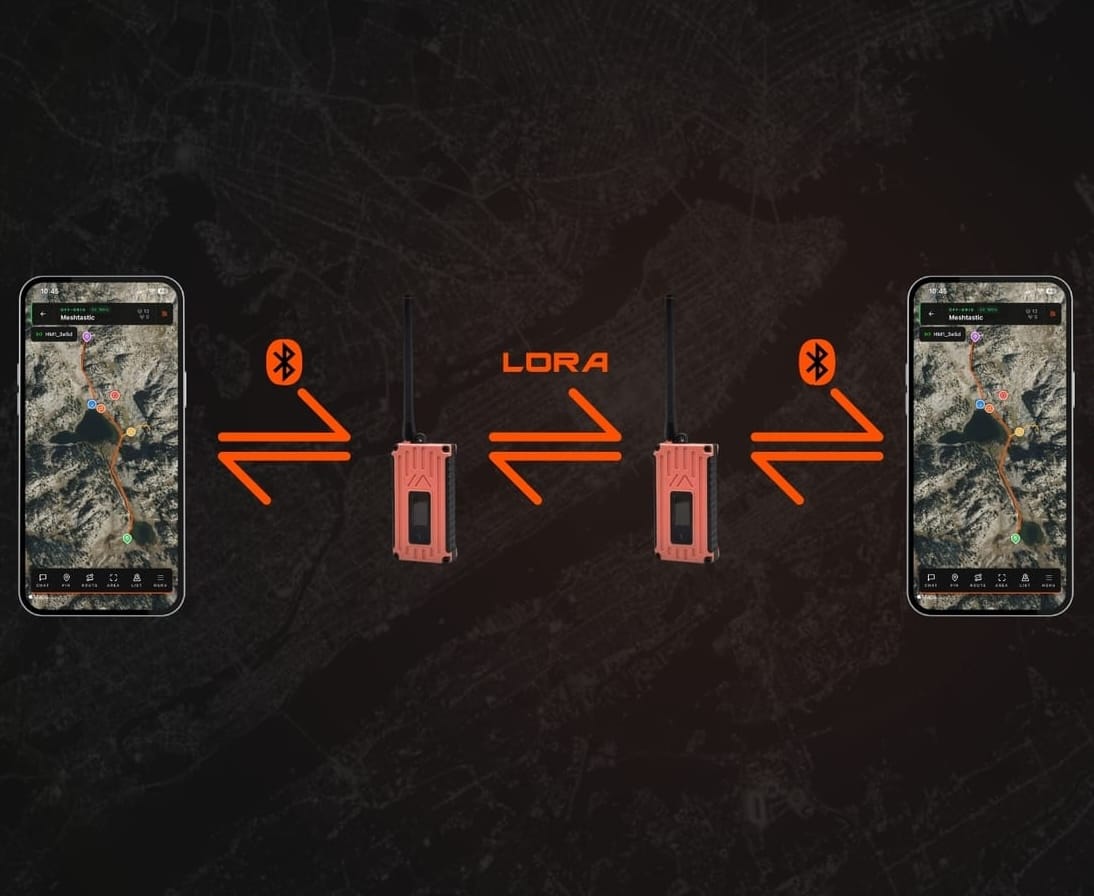
Meshtastic came first. It launched in 2019, went open-source, and grew into a community of well over 100,000 active users worldwide. The way it works is straightforward: every node hears a message and rebroadcasts it, hop by hop, until it reaches its destination or hits the hop limit. Dead simple, zero configuration, works beautifully for small groups. You flash the firmware in a browser, set your region, and within ten minutes you're sending encrypted text messages over radio to anyone in your mesh. The community around it is enormous, there are guides for every device, tutorials for every use case, and a live map at meshmap.net that shows active node positions reported.
 Adrelien
MeshCore arrived in early 2025 and took a different approach. Its designers looked at the flood-routing model and decided it didn't scale. When a mesh grows to dozens or hundreds of nodes, every device rebroadcasting every message creates noise that eats the limited radio airtime you have. MeshCore uses smarter routing: flood once to find the path, then send everything that follows directly down the route it learned. Less chatter, more throughput, meaningfully better performance on large regional networks. Messages land faster, not a "if you squint" difference, noticeably faster in real-world testing, and the network handles more simultaneous traffic without degrading.
It also introduced a concept Meshtastic doesn't have natively, a Room Server, which stores message history and hands it to people when they come back into range. Walk out of coverage for an hour, come back, and the server catches you up on everything you missed. For any group that isn't all online at the same time, that changes how usable the whole system is.
Adrelien
Both platforms run on identical hardware. Switching between them is a re-flash five minutes in a browser, same device. Many people run both, Meshtastic for connecting to the broader public network and MeshCore for private group infrastructure where performance matters. Neither requires any external infrastructure to function. Two devices in range of each other, or connected through a chain of intermediate relays, and the message gets through. The network is the people in it.
The Hardware: A Deck of Cards, a Week of Battery, $40
The gap between "interesting radio project" and "thing you'd actually take on a trail" has closed considerably in the past couple of years, and the hardware is a big part of why.
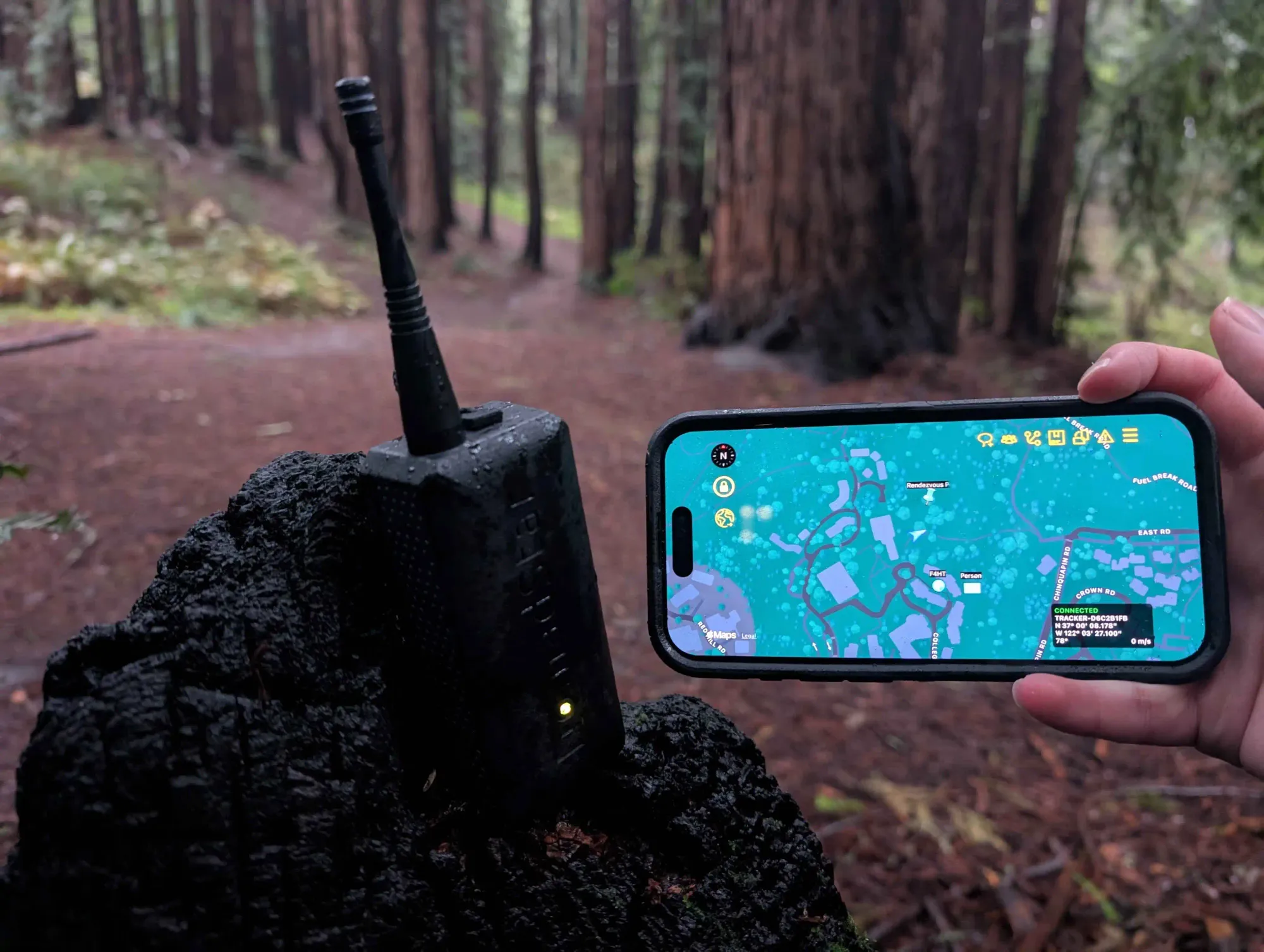
The entry point is genuinely cheap. A bare development board, a LoRa chip on a circuit board with a USB port and an antenna connector, runs around $20. You flash firmware onto it in a browser, connect an antenna, pair it to your phone over Bluetooth, and it works. The process takes about five minutes. The result is a radio node that relays messages across kilometres without consuming more power than a nightlight.
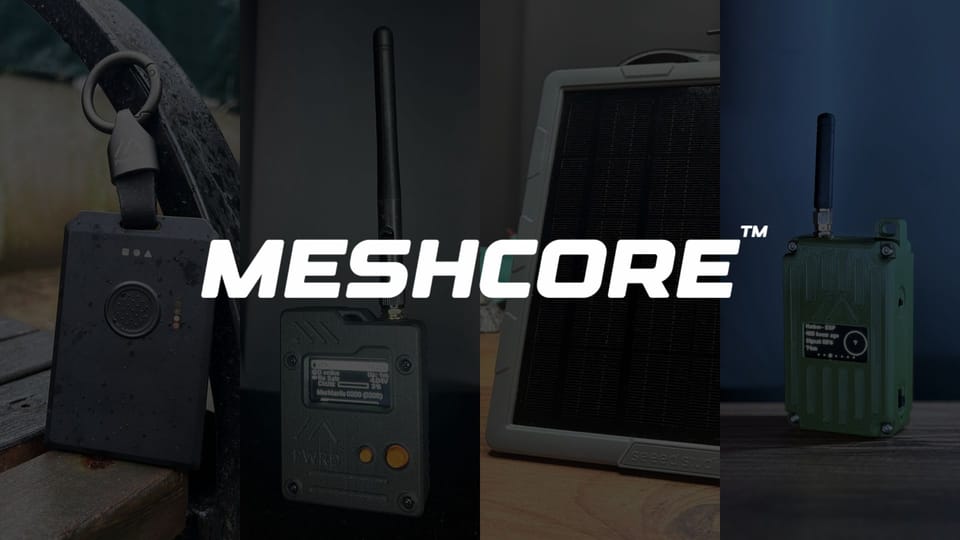
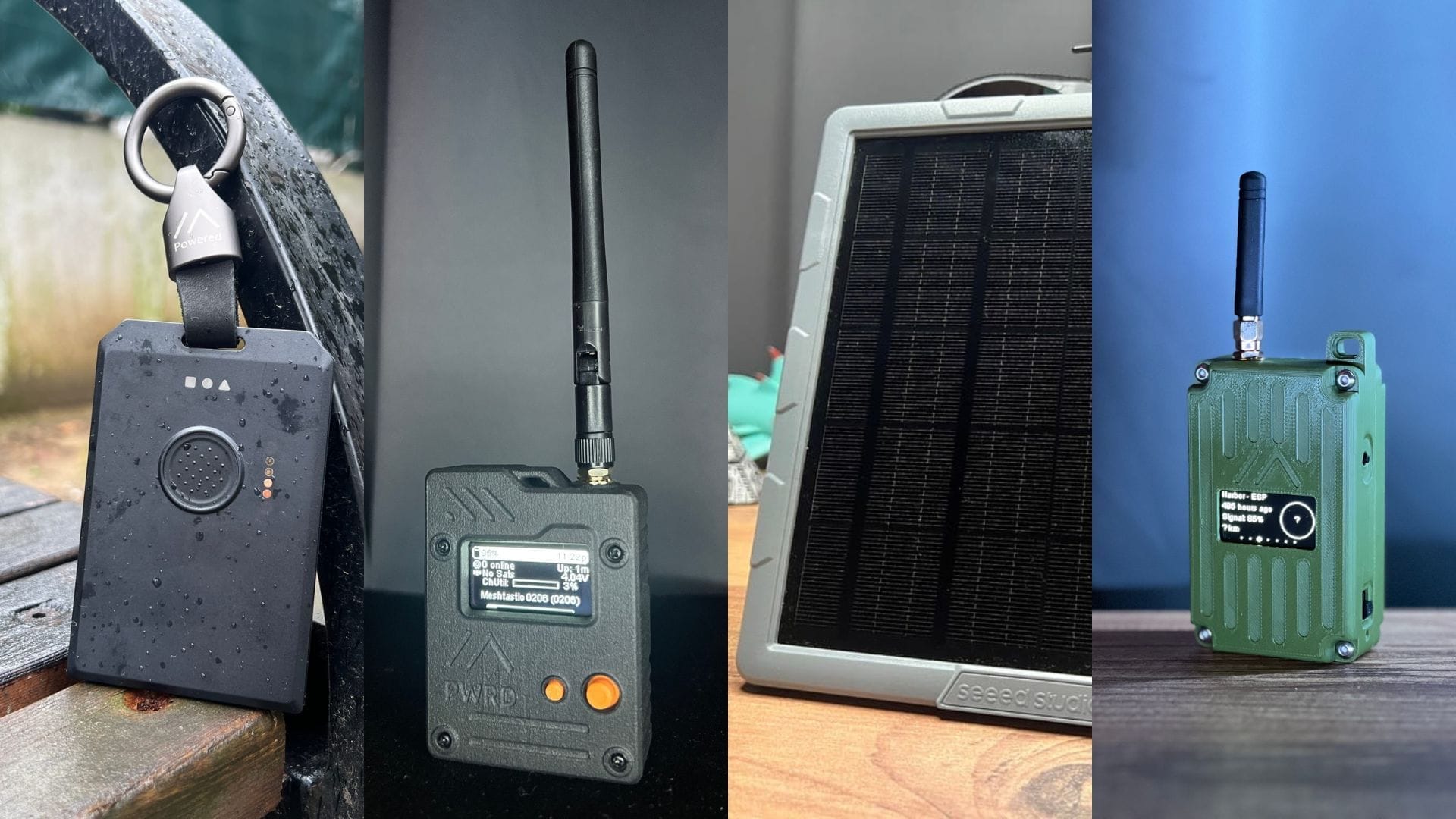
For people who want something ready out of the box, the options have matured considerably. The Seeed Wio Tracker L1 Pro is a complete self-contained handheld, battery, enclosure, built-in GPS, solar charging, a 1.3-inch screen, and a joystick for navigation, for $43. Everything included, nothing to solder. The RAK WisMesh Tag is about the size of a credit card with IP66 water resistance, built-in GPS, and a battery that lasts 5 to 6 days on a single charge, for $39.90. For permanent installations, a rooftop relay that extends the whole network, the SenseCAP Solar Node P1 Pro is a weatherproof solar-powered unit with 13,400 mAh of battery and a 5W panel, under $90. Mounted outdoors, it runs indefinitely. Tested indoors with zero sunlight, it ran for nine consecutive days before needing a charge.
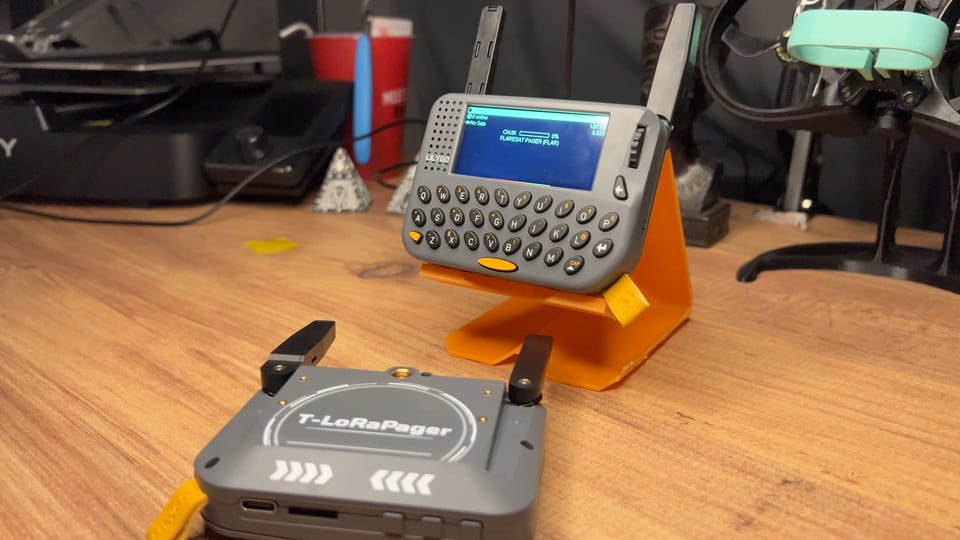
There are also standalone devices with full keyboards and colour screens that work without a phone at all. Power them on, see nearby nodes, and start typing. For people who want a dedicated communicator that doesn't depend on a paired smartphone staying charged and connected, that option now exists for around $84.
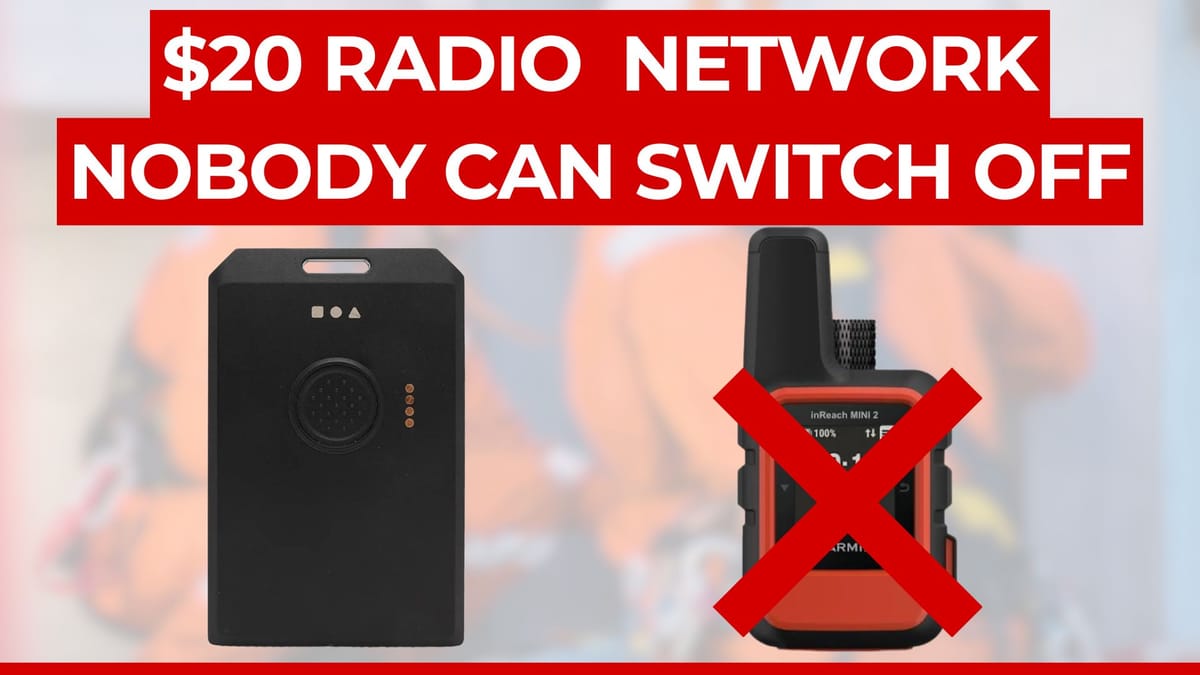
The comparison that usually lands with people encountering this for the first time: a Garmin inReach satellite communicator, the standard for serious off-grid communication costs $350 to $700 per device, with subscription plans running $15 to $65 a month, per device. Satellite coverage is global in a way LoRa mesh isn't. But for group situations where everyone is within a few kilometres of each other or of volunteer relay nodes a trail group, a search operation, an event crew the economics are stark. Two people fully equipped on LoRa mesh: under $100 combined, once, no recurring cost.
Adrelien
What People Are Actually Doing With It
The use cases that have grown up organically around LoRa mesh are not what the technology was originally designed for. They emerged because people started discovering what was possible and improvising.
Text messaging without cell towers was the obvious starting point. Groups of hikers, mountain bikers, trail runners, and backcountry skiers have been using Meshtastic for a couple of years now to stay in contact over terrain where cell coverage doesn't reach. Encrypted, no cell required, fits in a jacket pocket.
Position tracking followed quickly. Most LoRa devices include GPS and most firmware broadcasts location automatically, so everyone in a group appears on a map updating in real time on a phone, in a browser, or on the device screen itself. Search and rescue teams were early adopters for exactly this reason. Seeing where every person in a search grid actually is, rather than relying on voice radio check-ins, changes how you run an operation. You can see which ground has been covered. You can see when someone stops moving. You can coordinate without voice traffic.
Festival and event operations found it independently. Cell networks at large events are notoriously unreliable when tens of thousands of people are simultaneously on their phones, the towers saturate and you effectively lose connectivity even though there's technically service. LoRa doesn't use the cellular network at all, so it's completely unaffected. Safety teams, medical crews, and stage operations started running their own mesh networks at major outdoor events to stay coordinated regardless of what the crowd was doing.
Emergency preparedness is the fastest-growing conversation. The population of people thinking seriously about what communication looks like when cell infrastructure fails because of a major storm, an earthquake, or a sustained power grid failure has expanded noticeably. A handful of LoRa nodes represents a neighbourhood communication network that costs under $200 for a group, works indefinitely without any external infrastructure, and gets stronger as more neighbours add devices.
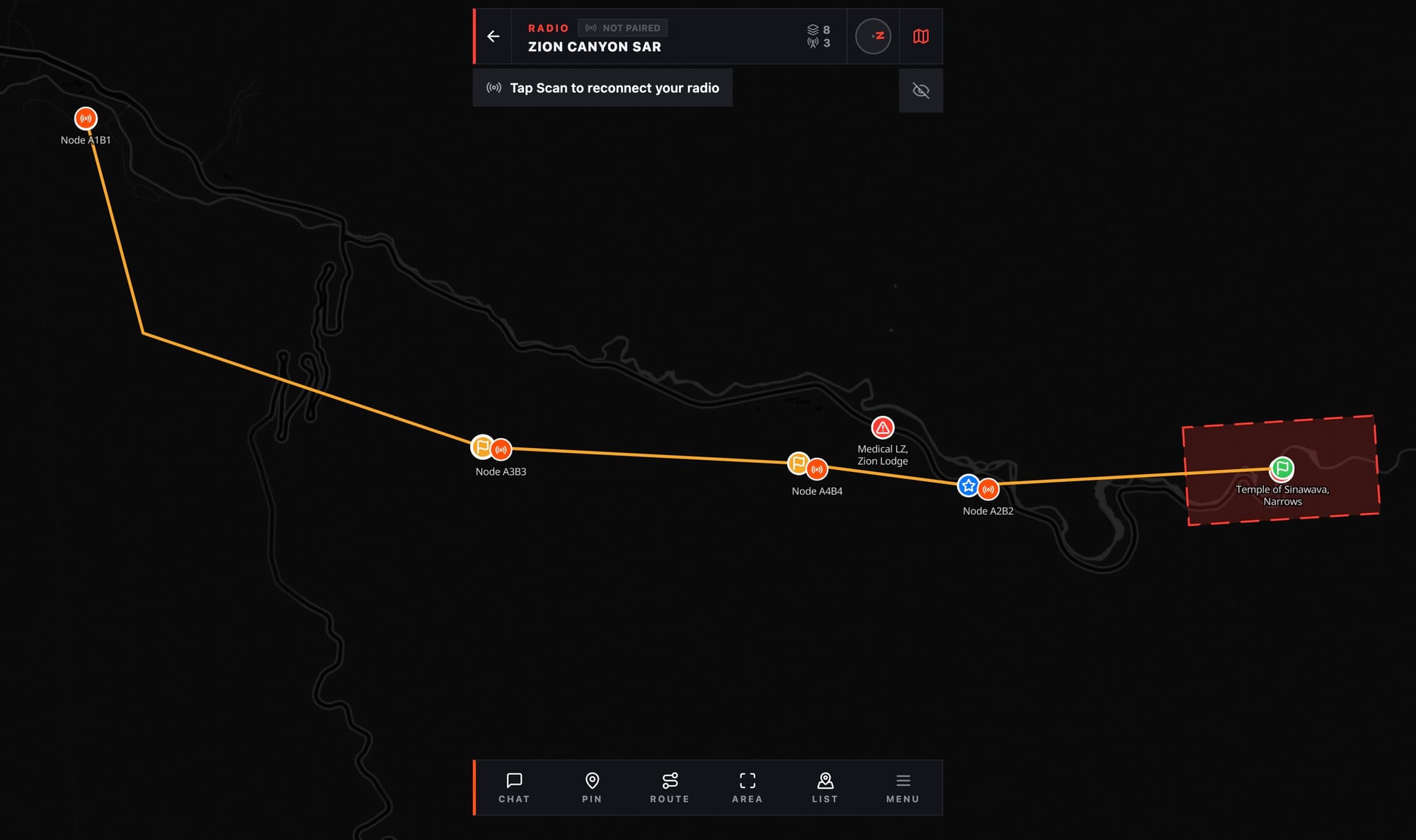
But all of these use cases ran into the same wall eventually. You could send messages. You could see positions. What you couldn't do, easily, was coordinate on a shared map. And for anything more complex than "I'm here, you're there" search grids, drawn routes, zone marking, hazard pins that gap mattered.
The Map Problem
Here's the honest version of what coordination looked like before this year.
For serious field users, the dominant software solution was ATAK Android Team Awareness Kit, originally developed for the US military. It's genuinely impressive software. Getting it working with a LoRa radio also required sideloading an APK from GitHub, configuring a TAK server, assigning callsigns, setting channel indices, verifying that background services were running correctly, and tolerating a UI built for trained military operators. iPhone users couldn't really do it at all without a fragile workaround that only became possible in early 2026, and that still requires two separate apps running simultaneously just to hold the connection together.
For hiking groups, event crews, and volunteer SAR teams who need to be operational in ten minutes without an IT department, that's a wall. Most people hit it and went back to shouting into the radio.
The question of why nobody had built something simpler was fair. The honest answer is that the engineering was genuinely hard. LoRa protocols are deliberately low-bandwidth and lossy, that's what gives them the range and the battery life. But you can't stream map data over a low-bandwidth lossy channel the way you'd stream it over Wi-Fi. You need to compress everything into compact binary formats, send redundancy data alongside every transmission so dropped packets can be reconstructed, split large payloads like GPS routes into fragments with erasure coding so that partial delivery is enough to reconstruct the complete item, and do all of this on shared spectrum where other devices are competing for airtime.
Getting that right took time. And then someone got it right.
What the App Layer Looks Like Now
Both Meshtastic and MeshCore ship with their own companion apps, and for most people they're the obvious starting point.
The Meshtastic app available on iOS, Android, and as a web interface handles the basics well: pairing your device over Bluetooth, sending and receiving text messages, seeing your position and your contacts' positions on a built-in map, configuring channels and encryption keys. It's actively maintained, free. For a group that wants to send messages and see roughly where everyone is, it covers most of what you need without installing anything extra. The Android version also supports a mesh-to-MQTT bridge, which lets you pipe data into home automation systems or custom dashboards, a rabbit hole the community has gone down enthusiastically.
MeshCore takes a slightly different philosophy with its interface. Rather than a single monolithic app, it exposes a clean companion app for messaging and node management alongside a browser-based console for deeper configuration. The Room Server integration, where a designated node stores message history and syncs it to people coming back into range is accessible directly from the app. The tradeoff is a steeper initial setup compared to Meshtastic, but for groups that need reliable performance on larger networks, the extra ten minutes of configuration pays back quickly.
Where both native apps still show their edges is map coordination, anything beyond "here are everyone's positions as dots." Shared pins, drawn routes, zone marking, geofencing alerts, the ability to annotate the map collaboratively and have those annotations appear on everyone's screen in real time that layer has been harder to build on a low-bandwidth lossy radio channel, and neither native app has fully cracked it yet. ATAK does work but on very specific settings which result in the range being very limited. That's because it uses a lot of bandwidth. So think about it like this. Higher bandwidth, lower range. Longer range means lower bandwidth.
That's the gap a newer app called Flaresat has been specifically built to fill. It works across both Meshtastic and MeshCore hardware, runs free on iOS, Android, and in a browser, and treats the radio as just another transport underneath a full collaborative map. Drop a pin and it appears on every member's screen within seconds. Draw a route, Mark a search zone, all without any cell signal.
It also tackled the split-team problem that field operations constantly run into. In most real deployments, not everyone loses connectivity simultaneously, the coordinator is at the vehicle with LTE while the field teams are in the canyon with nothing. Bridging those two worlds had always required server administration.
Flaresat's Relay Bridge reduces that to one tap. One person with signal links the radio group to a cloud group and confirms. From that moment, everything the radio team does on the mesh appears live in the cloud group, and everything the cloud team does appears on every radio device in the field bidirectionally, in real time. A coordinator watching a browser tab anywhere in the world sees every field position live, drops a pin, and it appears on radios in a canyon with no cell service within seconds.
The native apps built the foundation. The hardware and firmware communities built the network. The app ecosystem on top of it is now filling in the gaps, one use case at a time.
The Bigger Picture
There's a thread running through all of this that goes beyond any single app or any single use case.
For the past 30 years, the answer to "how do I communicate?" has been "through a network owned by someone else." Cell carriers. Social platforms. Cloud services. The infrastructure underneath all of it is controlled by a relatively small number of companies, and its continued operation depends on those companies remaining solvent, the towers remaining powered, and the political and regulatory environment remaining stable.
Most of the time, that's fine. The infrastructure is excellent and the convenience is real. But the number of situations where it isn't fine, wildfires, hurricanes, earthquakes, network failures, crowded events, remote terrain, is not small. And the number of people who have personally experienced one of those situations has been growing.
What the LoRa mesh movement is building, entirely from the bottom up with no investors and no business model, is something the industry calls resilient infrastructure communication that degrades gracefully when parts of it fail, rather than going dark the moment one component breaks. Every node someone adds strengthens the network for everyone nearby. Every rooftop relay extends coverage for the whole community. The network has no headquarters, no subscription, and no owner.
It is, structurally, the most resilient communication option most people have ever had access to. And it fits in a jacket pocket.
The engineering work that's happened in the past year in firmware, in routing architecture, in the application layer on top of it — has started closing the gap between "impressive technical project" and "thing you can hand to a non-technical person and have them be useful with it in ten minutes." That gap isn't fully closed yet. But it's closing faster than most people realise.
The technology is catching up with the problem. The network is already there. And it's been getting stronger every time someone adds a node.
The radios: flaresat.com/radios · Flash firmware: flaresat.com/radio-setup Flaresat: iOS · Android · Web · Docs Further reading: The Best MeshCore Devices for Every Use Case (2026) · Meshtastic vs MeshCore: The Honest Truth